

Maths that inspires.
MatheZeit brings adaptive maths into every classroom. Developed from mathematics education research, aligned with the curriculum and designed for classroom use.
Scientifically studied with a control group: after six weeks, a greater gain in competence, more confidence and more enjoyment of maths. Learn more →
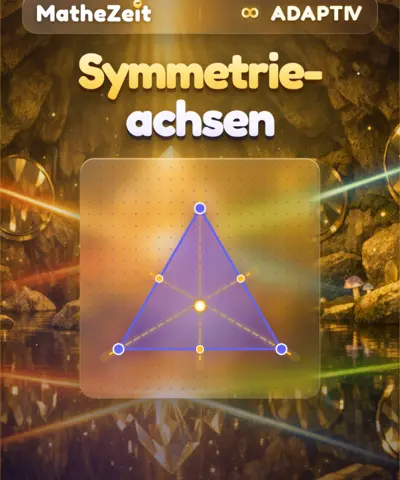


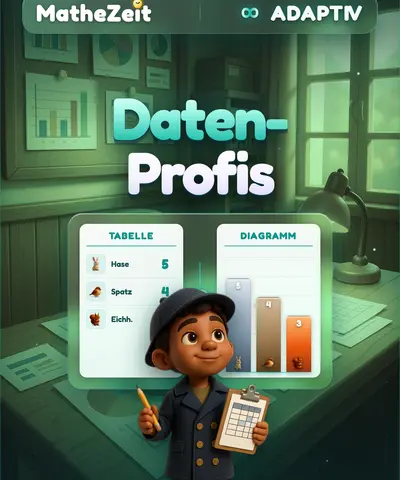
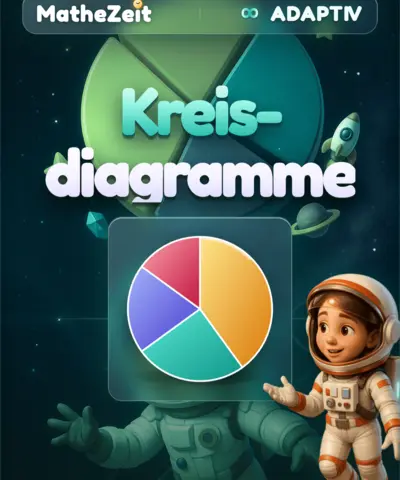
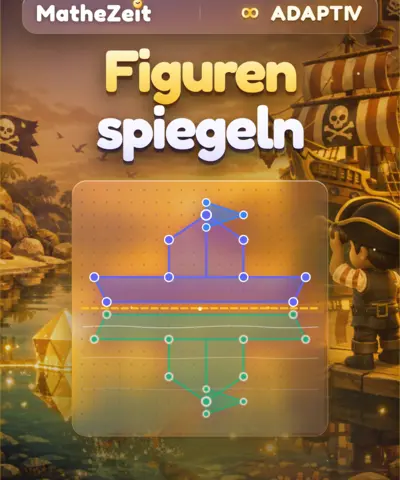
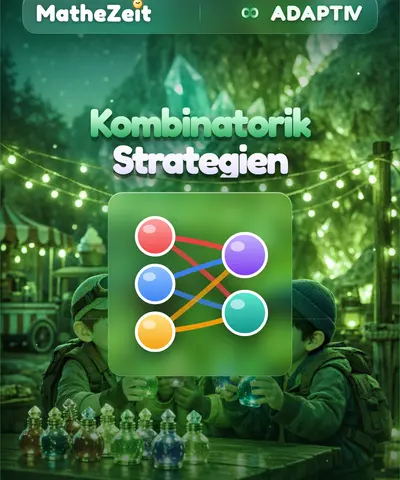

Maths learning platform for primary schools
Discovering maths through play
MatheZeit is an adaptive learning platform for maths lessons. In more than a hundred MatheZeiten, the Basiscamp and the Knobelbox, children puzzle, explore and understand with ever-new numbers and tasks, building core maths skills, language and confident use of digital media.
Registration is free for teachers.
Weekly tasks
Every Wednesday brings new interactive, digital task formats – available right away in the MatheZeit app and on the web platform.
Teacher dashboard
A detailed results overview and teaching notes for every class and every pupil.
Supplementary materials
Extra practice worksheets and answer keys to print out for the classroom.
Flexible to use
Available in the MatheZeit app and on the web platform – use it however works best for you.
“Children who normally don't dare to speak up finally get to show what they can do.”
“I keep discovering children I would never have noticed otherwise.”
“Days in advance the children are already saying: Wednesday is finally MatheZeit day.”
“Even topics that seem hard, like equations, were easy to work through.”
“In terms of quality, nothing else comes close to MatheZeit. The tasks really make you think.”
“The pupils find the MatheZeiten more interesting than other resources. They enjoy the tasks far more.”
“In terms of quality, nothing else comes close to MatheZeit.”
— Teacher
After every answer, a fitting next step
Easier or harder is only one direction. When a child gets stuck, MatheZeit changes the way into the same task: smaller numbers, a different representation, one step at a time. Every topic has many different task types with changing numbers and representations, so practice never turns into memorising.
Teachers steer the longer learning path. They see where the class stands and decide what comes next.
How adaptivity works in MatheZeitDiagnostic adaptivity
A wrong answer can be a slip, or a sign that a connection hasn’t been understood yet. A single answer can’t reliably tell the two apart.
So MatheZeit forms a hypothesis and tests it on further tasks with other numbers and representations. Only when a pattern repeats is it passed on to the teacher as a flag. It draws on a catalogue of more than 5,000 described misconceptions.
From answer pattern to misconceptionAnalysed without names and only for the current unit. Learning progress is visible only to the class’s own teacher.
Every child gets help that starts from their own way of thinking
Mazio responds to what the individual child has just done on the task. Every hint is backed by didactic planning: the learning goal of the task, the paths that lead to the solution, and where children typically get stuck.
Help comes in stages and is kept as small as possible: first a question, then a hint in the picture, then a partial step. That way the thinking stays with the child.
Every child gets this support exactly when they need it, even when the teacher is busy with someone else. That takes pressure off lessons and gives every child the same chance of getting help.
Questions that get children thinking
Mazio asks a question and offers answers to tap. Question by question, the child works out the method and finds the result on their own.
The questions target the misconception behind the wrong answer. Mazio leads the child to the point where their own idea doesn’t add up. Noticing the contradiction yourself changes your thinking more lastingly than a ready-made explanation.
In the end, children solve 99.9 per cent of tasks, including those where they needed help.
How MatheZeit uses artificial intelligenceMore time for the children
While the children practise, the class overview builds itself: who needs support, who is confident, who can go deeper. No marking, no tallying.
That makes it easy to plan the next lesson with purpose, and every unit comes with a detailed evaluation.
All surveyed teachers who use MatheZeit regularly say it saves them preparation time.
How teachers experience MatheZeit in the classroomSome evaluations may differ or be unavailable depending on the region, because data-protection requirements differ.
Precise flags on misconceptions in the class
A misconception only shows up across many tasks: in the method, in the numbers, in the kind of deviation. MatheZeit analyses exactly these traces across every child in the class. If a pattern holds for several children, a flag is raised, checked against our database of more than 5,000 misconceptions.
The flags come from ordinary practice, with no extra test. The teacher makes the call: they confirm or dismiss the flag and get exercises that target this misconception.
How the misconception flags are generatedHighlight a unit for the whole class
The teacher drags a unit from the shelf onto the class board. At that very moment it is ready on the children’s devices. Whether it is compulsory or optional, and until when, is up to the teacher.
Every unit comes with teaching notes and printable worksheets. A new one is added every week.
Kinder brauchen keinen Namen, nur einen Code
Nur die Lehrkraft kann einen Code einem Kind zuordnen.
Kein Konto, keine E-Mail, kein Foto. Ordnet die Lehrkraft einem Code einen Namen zu, wird er mit einem Schlüssel aus ihrer PIN verschlüsselt gespeichert. MatheZeit kann ihn nicht lesen.
Betrieb in Deutschland
Lernumgebung, Aufgabensteuerung und Lerndaten laufen auf Servern in Deutschland. Die Sprachmodelle des Tutors laufen in Rechenzentren in der EU und erhalten keine personenbezogenen Daten.
Die Schule bleibt verantwortliche Stelle. MatheZeit arbeitet als Auftragsverarbeiter mit Vereinbarung nach Art. 28 DSGVO. Für die Verarbeitung liegt eine Datenschutz-Folgenabschätzung nach Art. 35 DSGVO vor.
Der Tutor bekommt nur die Aufgabe
Mazio erhält die Aufgabe und die Eingabe des Kindes, sonst nichts. Weder Name noch Code noch Lernverlauf verlassen die Plattform. Mazio ist für die Kinder als KI gekennzeichnet und bewertet nicht.
Die Sprachmodelle laufen in Rechenzentren in Europa und erhalten keine Namen oder Zugangscodes der Kinder.
Löschung zum Schuljahresende
Lernverläufe dienen der Lehrkraft während des Schuljahres. Mit dessen Ende werden sie gelöscht. Codes und Klassen löscht die Lehrkraft selbst, spätestens werden auch sie zum Schuljahresende gelöscht.
Server-Logdateien werden nach 14 Tagen gelöscht.
Browser und iPad-App
MatheZeit läuft im Browser auf jedem Gerät und als App auf dem iPad, auch auf geteilten Klassengeräten. Eine Installation auf Schulrechnern ist nicht nötig.
Anbindung an Lernplattformen
Über LTI 1.1 und 1.3 lässt sich MatheZeit in bestehende Lernplattformen einbinden. Kinder öffnen es dann direkt aus dem Kurs, ohne zweite Anmeldung.
Unterlagen für die Schule
Datenschutzerklärung, Auftragsverarbeitungsvereinbarung und Datenschutz-Folgenabschätzung liegen vor.
Developed from maths education research, tested in the classroom
Every unit is specified before it is built: learning goal, solution paths, typical misconceptions, graded hints. Maths education, learning research and learning design work on this together.
A unit is only released once teachers have tried it in their own lessons. Anything they notice goes back to the workshop.
More learning in the same time
In a scientific study in Germany, children in grades 3 and 4 worked with MatheZeit for six weeks during their regular maths lessons. A comparison group had regular teaching.
The children using MatheZeit made greater gains in maths skills, without a single minute of extra practice time. The advantage appeared in both grades.
The efficacy study at a glanceConfidence that survives mistakes
Confidence in maths usually declines over the course of primary school. In the accompanying survey it rose after six weeks with MatheZeit, most strongly for the statement “I can solve difficult tasks too”.
The enjoyment remained even when a task only worked out after several attempts. Every task ends with a solution, with help from Mazio rather than giving up.
Why mathematical self-concept mattersBuilt around five content areas
The MatheZeiten follow the five content areas of the German national education standards for primary school. Each one is assigned to an area, and the dashboard evaluation uses the same structure.
MatheZeiten and the Knobelbox cover grades 3 and 4, and the Basiscamp goes up to grade 6. A new unit is added every week.
Mehr Kompetenzzuwachs in derselben Lernzeit
In einer wissenschaftlichen Untersuchung arbeiteten Kinder der Klassen 3 und 4 sechs Wochen mit der Plattform, in den regulären Mathematikstunden. Eine Vergleichsgruppe hatte regulären Unterricht.
Die MatheZeit-Gruppe erzielte einen höheren Kompetenzzuwachs. In Lernzeit übersetzt entspricht der Vorsprung etwa drei bis vier Monaten, ohne eine Minute zusätzlicher Übungszeit.
The efficacy study at a glanceKinder mit niedrigem Startniveau gewinnen am meisten Zutrauen
Das mathematische Selbstkonzept sinkt im Verlauf der Grundschule typischerweise. In der Begleiterhebung stieg es nach sechs Wochen mit MatheZeit, am deutlichsten bei den Kindern, die mit dem geringsten Zutrauen gestartet waren.
Im unteren Drittel nahm das Zutrauen um 17 Prozentpunkte zu, das Interesse an Mathematik um 22. Kinder, die sich Mathe zutrauen, lernen nachweislich mehr Mathe.
Why mathematical self-concept mattersSpaß, der einen Fehler aushält
Am Ende jeder MatheZeit bewerten die Kinder, wie sie ihnen gefallen hat. Der Median liegt bei 10 von 10. Nach sechs Wochen sagen 84 Prozent, dass sie weitermachen wollen.
Bemerkenswert ist der Umgang mit Fehlern: 72 Prozent berichten auch nach Aufgaben, an denen sie zunächst gescheitert sind, dass sie Spaß hatten. Jede Aufgabe wird bis zur Lösung bearbeitet, mit Hilfe statt mit Abbruch.
Further reading
The MatheZeit efficacy study
Design, results and limitations of the study, clearly summarised.
ResearchWhy mathematical self-concept matters
What strengthens confidence in maths and what the accompanying survey shows.
DidacticsAdaptivity goes beyond “easier or harder”
Micro-adaptivity, hint ladders and the assistance dilemma.
MatheZeit Partnerschulen
Gute Bildung entsteht gemeinsam.
Als Partnerschule neue Funktionen frühzeitig erproben, Erfahrungen teilen und MatheZeit aktiv mitgestalten.

Partnerschule werden
Welche Schule möchte mitmachen?
Suchen Sie Ihre Schule im Schulverzeichnis. Die Unterlagen zum Partnerprogramm schicken wir an die Adresse, die unten steht.
Keine Schule gefunden. Versuchen Sie den Ort oder die Postleitzahl.
Für diese Schule ist im Verzeichnis keine Adresse hinterlegt. An welche Adresse sollen wir schreiben?
Wir nutzen die Adresse nur für diese Anfrage. Datenschutz
Danke, die Anfrage ist da.
Wir melden uns mit den Unterlagen zum Partnerprogramm bei .
Audiences
Further information.
Background on using, introducing and running MatheZeit.




Adaptive, generatively created maths tasks for grades 3 and 4 — take a look at our MatheZeiten collection below.